Food · Petra · Jordan
What to eat in Petra
The dishes, drinks and food experiences that define Petra, and where locals actually eat them.
Updated By the AMZBooking editorial team
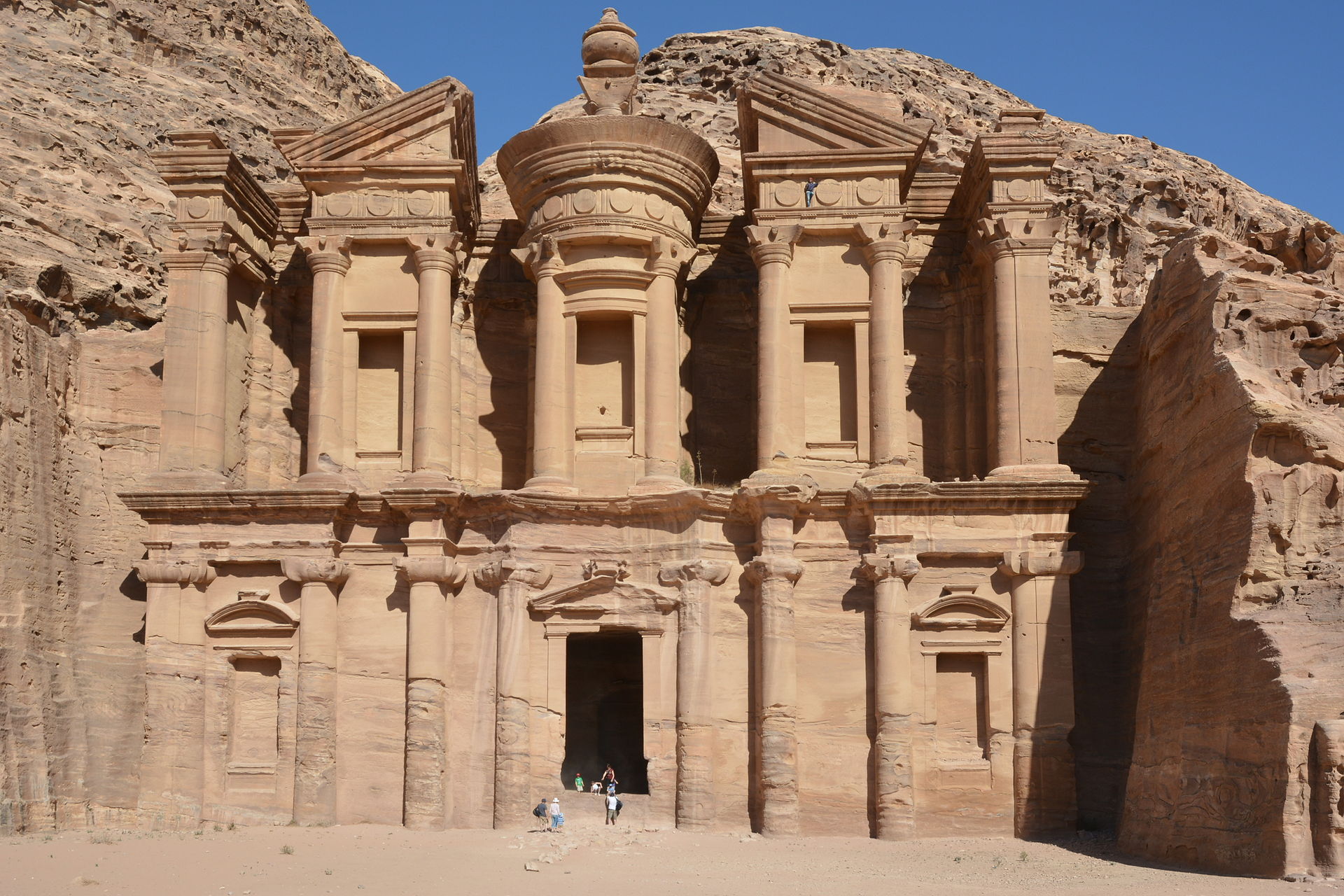
Photo: Azurfrog, CC BY-SA 3.0

Quick answer
Start with Mansaf, Maqluba and Zarb. Camps near Little Petra serve zarb lifted from the sand pit, with salads, rice and Bedouin tea around a fire, often with music afterwards. Food inside the archaeological site is limited and pricier; pack a sandwich and snacks from Wadi Musa.
Key facts
- Signature dish
- Mansaf
- Vegetarian-friendly picks
- 6
- Tipping
- About 10% in restaurants is customary if no service charge is added.
- Food experiences
- 3
10 foods to try
Dish
1.Mansaf
Jordan's national dish: lamb cooked in jameed, a tangy sauce of fermented dried yoghurt, served on rice over thin shrak bread and scattered with almonds and pine nuts. It is a dish of hospitality and celebrations, traditionally eaten from a shared platter.
Where: Traditional restaurants in Wadi Musa and at hotel buffets; often prepared to order for groups.
Dish
2.Maqluba
Rice, chicken and fried vegetables such as aubergine and cauliflower are layered in a pot and turned upside down onto a platter at the table, hence the name, which means 'upside down'.
Where: Family-style restaurants and cooking classes in Wadi Musa.
Dish
3.Zarb
The Bedouin barbecue: chicken, lamb and vegetables are placed on racks in a pit, covered with sand and slow-cooked by hot coals for a few hours, giving smoky, tender meat.
Where: Bedouin camps around Little Petra and in Wadi Rum, usually served at dinner.
Dish · Vegetarian
4.Galayet bandora
Tomatoes slowly fried with garlic, chilli and olive oil until jammy, eaten with bread. Simple, cheap and a staple of Bedouin and village cooking.
Where: Local restaurants in Wadi Musa; also taught in cooking classes.
Street food · Vegetarian
5.Falafel and hummus
Crisp chickpea falafel with hummus, pickles and fresh bread is the everyday breakfast and cheap lunch in Jordan, often with ful (stewed fava beans) on the side.
Where: Falafel shops around the main roundabout in Wadi Musa; pack a sandwich for the site.
Drink · Vegetarian
6.Bedouin tea (Shai bi maramiya)
Sweet black tea brewed over a fire with wild sage (maramiya) or thyme, served in small glasses. Being offered tea is a gesture of welcome.
Where: Tea stalls inside Petra, at viewpoints such as the Al-Khubtha trail and at Bedouin camps.
Drink · Vegetarian
7.Arabic coffee (Qahwa sada)
Bitter, cardamom-scented coffee poured in tiny cups as a sign of hospitality; shake the cup gently from side to side to show you have had enough.
Where: Bedouin camps, hotels and traditional restaurants.
Bakery · Vegetarian
8.Shrak bread
Paper-thin unleavened bread baked on a domed metal saj over a fire, used to scoop up food and as the base of mansaf.
Where: Bedouin camps and traditional restaurants, often baked in front of you.
Dessert · Vegetarian
9.Kunafa
Warm white cheese under a layer of shredded or semolina pastry, soaked in sugar syrup and topped with pistachios. Best eaten hot.
Where: Sweet shops in Wadi Musa town centre.
Dish
10.Musakhan
Roast chicken on taboon bread soaked in olive oil and heaped with onions cooked with sumac, a Palestinian dish common across Jordan.
Where: Family restaurants in Wadi Musa, sometimes as a special order.
Food experiences
Bedouin camp dinner
Camps near Little Petra serve zarb lifted from the sand pit, with salads, rice and Bedouin tea around a fire, often with music afterwards.
Tea at a viewpoint
Small Bedouin tea stalls sit at viewpoints inside Petra, including above the Treasury and near the Monastery; a glass of sage tea is the traditional reward after a climb.
Cooking class in Wadi Musa
Learn to make maqluba and mezze with local cooks, then sit down to eat what you have prepared together.
Quick bites and street food
- Falafel and hummus — Falafel shops around the main roundabout in Wadi Musa; pack a sandwich for the site.
- Shrak bread — Bedouin camps and traditional restaurants, often baked in front of you.
Vegetarian options
Of the 10 foods in this guide, 6 are usually vegetarian: Galayet bandora, Falafel and hummus, Bedouin tea, Arabic coffee, Shrak bread and Kunafa. Check preparation with staff, as stocks and fats vary.
Eating out: tips and etiquette
- Food inside the archaeological site is limited and pricier; pack a sandwich and snacks from Wadi Musa.
- Carry at least two to three litres of water per person for a full day inside the site, more in summer.
- Restaurants in Wadi Musa fill early with tour groups; local places around the roundabout are better value.
- Alcohol is available in some hotels and a few restaurants in Wadi Musa, but not at the stalls inside Petra.
- During Ramadan many local restaurants open only from sunset, though hotel restaurants serve visitors.
Tipping
About 10% in restaurants is customary if no service charge is added. Guides and drivers are usually tipped at the end, and horse handlers at the gate expect a small tip.
| Phrase | Meaning |
|---|---|
| Marhaba | Hello |
| Shukran | Thank you |
| La, shukran | No, thank you |
| Ahlan wa sahlan | Welcome |
| Kam? | How much? |
| Yalla | Let's go |
Questions travellers ask
+What food is Petra famous for?
Mansaf, Maqluba, Zarb and Galayet bandora. Jordan's national dish: lamb cooked in jameed, a tangy sauce of fermented dried yoghurt, served on rice over thin shrak bread and scattered with almonds and pine nuts.
+Is Petra good for vegetarians?
Several local staples are meat-free, including Galayet bandora, Falafel and hummus and Bedouin tea.
+Do you tip in restaurants in Petra?
About 10% in restaurants is customary if no service charge is added. Guides and drivers are usually tipped at the end, and horse handlers at the gate expect a small tip.