Travel guide · Uruguay
Montevideo travel guide
A long Rambla, art deco streets, parrillas and the world's longest carnival
Updated By the AMZBooking editorial team
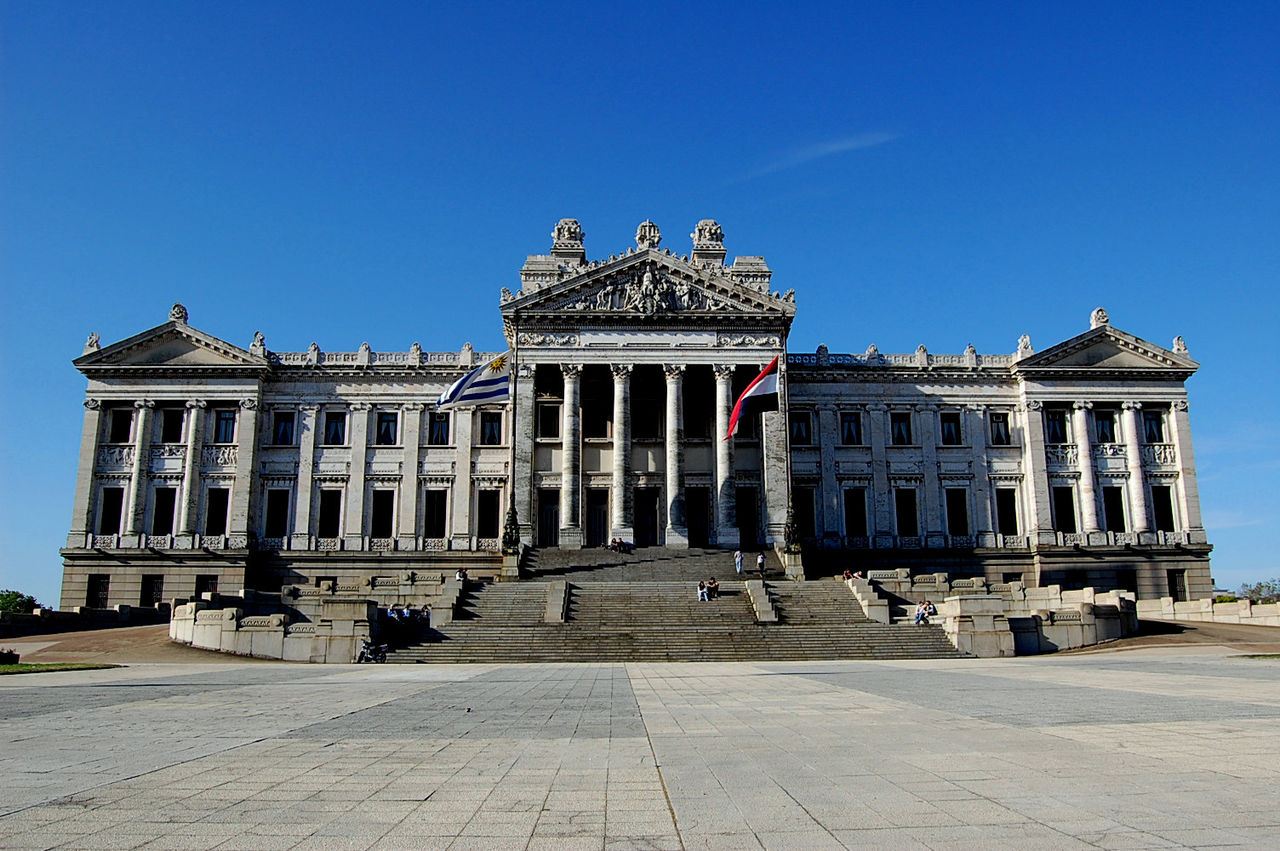
Photo: Eduardo Ruggieri, CC BY-SA 3.0

Quick answer
Uruguay's capital lines the north shore of the Río de la Plata, with a waterfront promenade, the Rambla, running for over 20 km past city beaches from the old port to Carrasco. The Ciudad Vieja and the Centro around Plaza Independencia hold the art deco and neoclassical landmarks, the Teatro Solís and the Mercado del Puerto's wood-fired grills, while Pocitos and Punta Carretas are residential beach districts. The pace is unhurried, mate flasks are everywhere and Colonia del Sacramento and Punta del Este are easy day trips. Plan 3 days for a first visit; the best months are November–March.
Key facts
- Country
- Uruguay
- Best time to visit
- November–March
- Ideal stay
- 3 days
- Main airports
- MVD
- Mid-range daily budget
- $130–$230 per person (estimate)
- Known for
- Rambla waterfront, Asado and parrillas, Chivito sandwich and Candombe and carnival
Why visit Montevideo
- The Rambla is one of South America's great urban waterfronts, busy with walkers, cyclists and mate drinkers at sunset.
- The Mercado del Puerto's parrillas grill beef, chorizo and offal over wood embers in an iron market hall from the 1860s.
- Carnival runs for around 40 days from late January, with candombe drum parades and satirical murga theatre.
- Art deco buildings line Avenida 18 de Julio, and the Palacio Salvo towers over Plaza Independencia.
- Colonia del Sacramento's cobbled lanes, the beaches of Punta del Este and Uruguay's Tannat wineries are within a few hours.
Top things to do
The six sights most first-time visitors build a trip around. See all 18 things to do.


Waterfront · Pocitos
The Rambla
Montevideo's waterfront promenade follows the Río de la Plata for over 20 km, from the Ciudad Vieja past Parque Rodó, Punta Carretas, Pocitos and Buceo to Carrasco.
- Time needed
- 2–3 hours
- Cost
- Free
- Iconic
- Free
- Outdoors
- Couples
- Kids
- Active
Landmark · Centro
Plaza Independencia and Artigas Mausoleum
The city's main square divides the Ciudad Vieja from the Centro, with an equestrian statue of independence hero José Artigas above an underground mausoleum holding his remains under a guard of honour.
- Time needed
- 45 minutes
- Cost
- Free
- Iconic
- Free
- History
- Architecture
Architecture · Centro
Palacio Salvo
Completed in 1928, the eclectic, tower-topped Palacio Salvo was for a time the tallest building in South America and remains the city's emblem.
- Time needed
- 1 hour
- Cost
- Low cost
- Architecture
- Views
- History
- Iconic


Market · Ciudad Vieja
Mercado del Puerto
A cast-iron market hall built in Liverpool and assembled by the port in the 1860s now shelters a dozen parrillas, where cooks tend huge wood-fired grills of beef, chorizo, morcilla and provolone.
- Time needed
- 1.5 hours
- Cost
- Mid-priced
- Food
- Iconic
- Architecture


Architecture · Ciudad Vieja
Teatro Solís
Uruguay's main theatre, opened in 1856 beside Plaza Independencia, has a neoclassical portico and a horseshoe auditorium that stages opera, ballet, concerts and plays.
- Time needed
- 1 hour
- Cost
- Low cost
- Architecture
- History
- After dark
- Rainy day
- Couples
Neighbourhood · Ciudad Vieja
Ciudad Vieja and Peatonal Sarandí
The pedestrian Peatonal Sarandí runs from the Puerta de la Ciudadela to the old port, passing Plaza Matriz with the Metropolitan Cathedral and the colonial Cabildo.
- Time needed
- 2–3 hours
- Cost
- Free
- Free
- History
- Architecture
- Shopping
Where to stay
Ciudad Vieja is the easiest base for a first visit. Compare all 8 areas.
$$$ · Best for first-timers, culture and couples
Ciudad Vieja
The old port peninsula of colonial and art deco streets, museums and parrillas
$$ · Best for first-timers, budget and shopping
Centro
Avenida 18 de Julio's art deco façades, shops, cafés and theatres
$$ · Best for budget, solo travellers and nightlife
Cordón
University streets, the Sunday flea market and craft-beer bars
$$ · Best for families, nightlife, budget and beach
Parque Rodó
A lakeside park, an art museum and bars near Playa Ramírez
What to eat
- Chivito — Uruguay's national sandwich: thin beef steak with ham, mozzarella, bacon, fried egg, lettuce, tomato and mayonnaise in a soft bun, usually served with chips.
- Asado — Grilled beef cuts such as tira de asado (short ribs), vacío (flank) and entraña (skirt), cooked slowly over wood embers rather than charcoal, with chorizo, morcilla and grilled provolone.
- Choripán — A grilled chorizo split in a crusty roll, often with chimichurri or salsa criolla; the classic snack at football matches and street stalls.
- Medio y medio — A mix of sparkling and dry white wine served as an aperitif, created at the Mercado del Puerto's Café Roldós, which has served it for generations.
- Mate — Bitter yerba mate tea sipped through a metal straw (bombilla) from a gourd, topped up from a thermos tucked under the arm.
- Tannat — The robust red grape, originally from south-west France, is Uruguay's signature wine, often tannic and dark, and it pairs well with grilled beef.
When to go
The best time to visit Montevideo is from November to March, when the weather is warm enough for the Rambla and the beaches and the city is at its liveliest, with carnival in January and February. March, April and November are quieter and still pleasant. Winter (June to August) is cold, damp and windy but cheap.
| Season | Months | What to expect |
|---|---|---|
| Summer | December–February | Warm, sunny weather, busy beaches and carnival; many Montevideans leave for the coast in January. |
| Autumn | March–May | Mild and settled at first, cooling by May, with the wine harvest and the Semana Criolla gaucho festival. |
| Winter | June–August | Cool, damp and windy, with lows near 6°C; low hotel prices and a quiet, local feel. |
| Spring | September–November | Blustery at first, then warm and sunny by November with roses in bloom in the Prado. |
Getting there and around
Carrasco International Airport (MVD) is about 20 km east of the centre. Intercity buses stop outside the terminal and run to the Tres Cruces bus station in about 45 minutes; taxis and remises (pre-booked cars) take about 30–40 minutes to the Centro or Pocitos.
Montevideo has no metro; city buses cover every district, and taxis and ride-hailing apps are reasonably priced. The Ciudad Vieja and Centro are walkable, and the Rambla is the natural route east to Parque Rodó, Pocitos and Carrasco.
Plan your days
Two days covers the Ciudad Vieja, Plaza Independencia, the Mercado del Puerto and a long walk on the Rambla to Pocitos. A third day adds the Prado, museums and a winery; with five days, add Colonia del Sacramento or Punta del Este.
Practical information
- Currency
- UYU
- Language
- Spanish
- Plugs
- Type C, F, I and L sockets, 220 V, 50 Hz
- Tap water
- Tap water is treated and safe to drink across the city.
- Emergency number
- 911
- Tipping
- About 10% is customary in restaurants and is not usually added to the bill.
Petty theft and bag snatching occur in the Ciudad Vieja and Centro, especially on empty streets after dark and at the Sunday market; take a taxi at night. On city beaches, follow lifeguard flags for currents and water quality.
Flights to Montevideo
Questions travellers ask
+How many days do you need in Montevideo?
Two days covers the Ciudad Vieja, Plaza Independencia, the Mercado del Puerto and a long walk on the Rambla to Pocitos. A third day adds the Prado, museums and a winery; with five days, add Colonia del Sacramento or Punta del Este. How to split your days.
+When is the best time to visit Montevideo?
The best time to visit Montevideo is from November to March, when the weather is warm enough for the Rambla and the beaches and the city is at its liveliest, with carnival in January and February. March, April and November are quieter and still pleasant. Winter (June to August) is cold, damp and windy but cheap.
+What is Montevideo known for?
Rambla waterfront, Asado and parrillas, Chivito sandwich, Candombe and carnival, Mate, Tannat wine and Art deco architecture. The Rambla is one of South America's great urban waterfronts, busy with walkers, cyclists and mate drinkers at sunset.
+Is Montevideo expensive?
Montevideo is expensive for international visitors: a mid-range trip costs roughly $130–$230 per person per day before flights (AMZBooking estimate). Costs and money-saving tips.
+Do you need a car in Montevideo?
No. Buses, taxis and walking cover the city. A car is handy for exploring the coast towards Punta del Este or the Canelones wineries, but intercity buses from Tres Cruces are comfortable and frequent.