Travel tips · Crete · Greece
Crete travel tips: what to know before you go
The etiquette, money and practical details that make the first day easier.
Updated By the AMZBooking editorial team
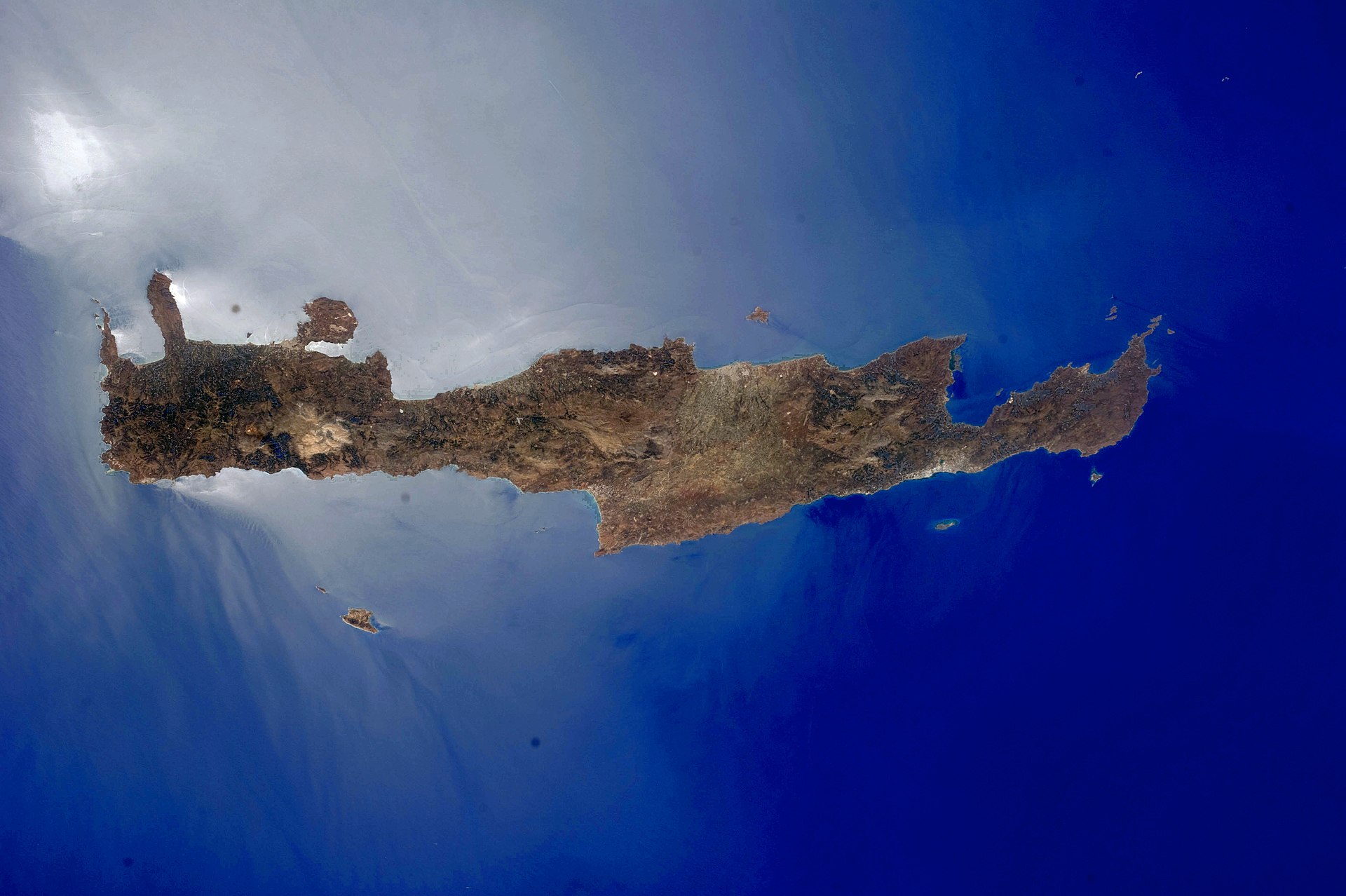
Photo: ISS Expedition 28 crew, Public domain

Quick answer
Cretans are proud of their island's identity: its own dialect, lyra music and improvised rhyming couplets called mantinades, and a strong tradition of hospitality. Village life still revolves around church festivals, olive harvests and family tavernas, and in mountain areas such as Sfakia some older men still wear black shirts and boots.
Key facts
- Language
- Greek
- Currency
- EUR
- Plugs
- Type C and F sockets, 230 V, 50 Hz
- Tap water
- Tap water is treated in the main towns, but quality varies by area and many…
- Emergency
- 112 (European emergency number)
Things to know
- Accept offered raki or food graciously; refusing hospitality can seem rude.
- Cover shoulders and knees when visiting monasteries and churches.
- Greet people in villages with 'Yia sas' — it is normal to say hello to strangers.
- Drive slowly through villages and watch for goats and sheep on mountain roads.
- Ask before photographing people, especially older villagers.
- Book Knossos ahead: Buy e-tickets online in advance in summer, when ticket queues build by mid-morning.
- Village tavernas inland are better value than harbour-front restaurants.
Tipping
Service is usually not included. Leaving about 5–10% in restaurants is customary, and rounding up for taxis and cafés is common.
Language
| Phrase | Meaning |
|---|---|
| Yia sas | Hello / goodbye (polite) |
| Kalimera | Good morning |
| Efharisto | Thank you |
| Parakalo | Please / you're welcome |
| Yamas | Cheers |
| To logariasmo, parakalo | The bill, please |
What to wear
Light clothes, sun hat and sturdy shoes for gorges and archaeological sites; a light jacket for mountain areas and spring and autumn evenings.
Practical details
- Plugs and voltage
- Type C and F sockets, 230 V, 50 Hz
- Drinking water
- Tap water is treated in the main towns, but quality varies by area and many people drink bottled water.
- Emergency number
- 112 (European emergency number)
- Phone and internet
- EU roaming applies to European SIMs; coverage is good in towns but patchy in deep gorges and remote south-coast areas.
- Time zone
- Europe/Athens
Crete is generally relaxed for visitors. Take care on narrow, winding mountain roads, carry plenty of water and sun protection on gorge hikes, and respect warning flags on windy west- and north-coast beaches, where currents can be strong.
Entry requirements
Visa and passport rules depend on your nationality and change often. Check Greece's official government guidance and your own government's travel advice before booking.
Plan the trip
Questions travellers ask
+Do you tip in Crete?
Service is usually not included. Leaving about 5–10% in restaurants is customary, and rounding up for taxis and cafés is common.
+Can you drink the tap water in Crete?
Tap water is treated in the main towns, but quality varies by area and many people drink bottled water.
+What plugs are used in Crete?
Type C and F sockets, 230 V, 50 Hz
+What language is spoken in Crete?
Greek.